
Area high schools
Moore, Westmoore, Southmoore, Norman North, Carl Albert, Edmond North, Edmond Memorial, Edmond Santa Fe, Putnam City North, Douglass.
Student-athlete program
A year-round performance and recovery framework designed to support physical development alongside academic and competitive demands.
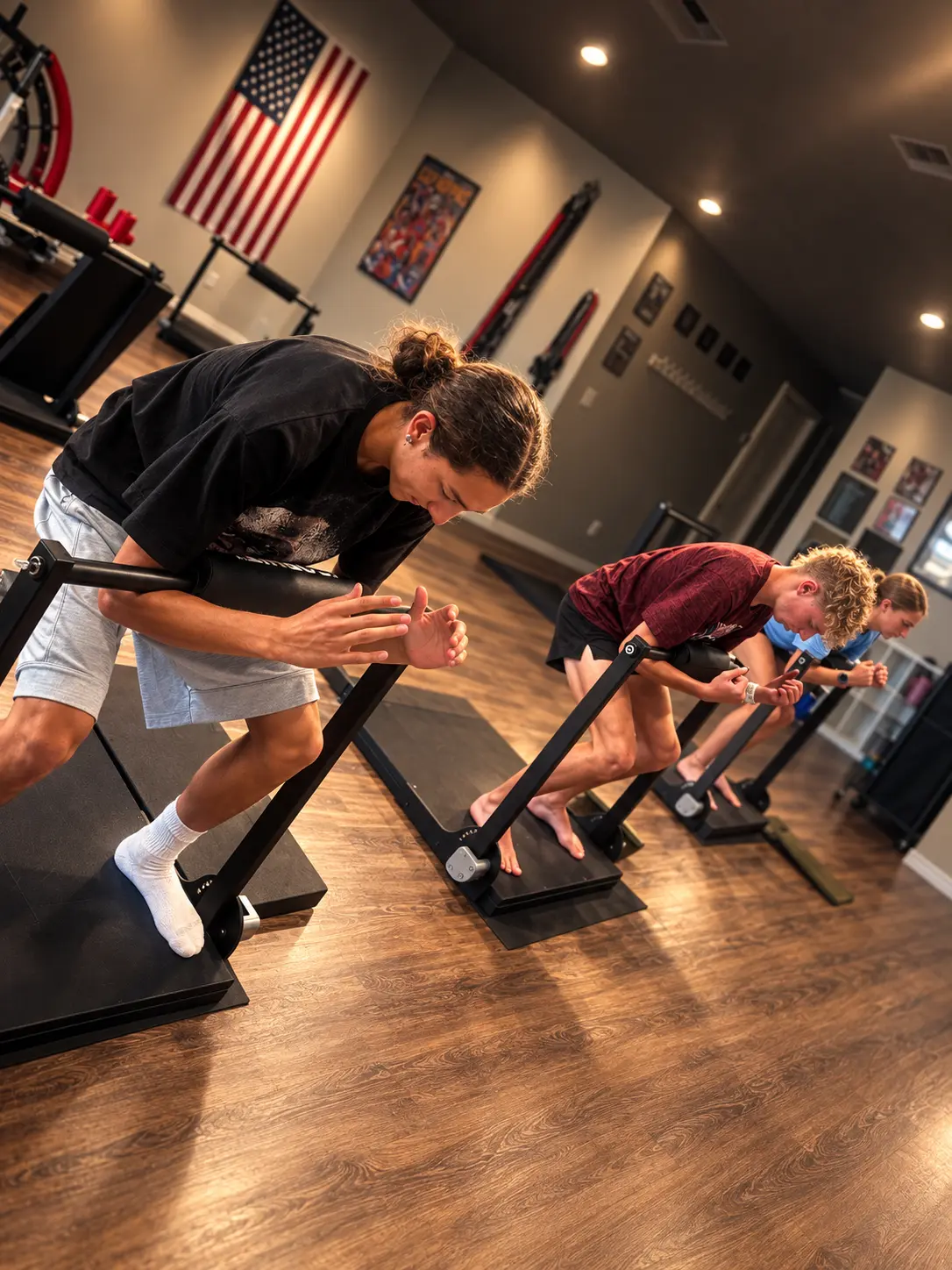
Performance with context
Sweat Is Free’s Alpha Shield™ combines isometric strength training, neuromuscular assessment, respiratory development, body-composition tracking, force measurement, and recovery support. Programming changes with the athlete’s needs, tier, competitive calendar, and stage of development.
Alpha Shield™ is limited to 10 active student-athletes throughout the year. This enrollment cap protects the individual attention, evaluation, and recovery support built into the program. When all 10 positions are filled, interested athletes may apply for the waitlist and can enter when a current participant leaves the program.
Diagnostic onboarding is conducted one-on-one. The program is designed to develop force production, joint stability, movement quality, respiratory capacity, and sustainable training habits without guaranteeing a particular performance or injury outcome.
Athlete reach
Student athletes from 10 area high schools have trained or recovered at Sweat Is Free® across eight sports categories.
Moore, Westmoore, Southmoore, Norman North, Carl Albert, Edmond North, Edmond Memorial, Edmond Santa Fe, Putnam City North, Douglass.
Football, basketball, softball, soccer, swimming, volleyball, wrestling, and cross-country/track and field.
Athletes who trained or recovered at SIF have committed to or continued with programs at The University of Oklahoma, Rogers State University, Oklahoma City University, Harding University, Northeastern State University, Missouri Southern State University, San Angelo State University.
Schools and universities are listed to document athlete participation and subsequent paths. Their inclusion does not imply institutional sponsorship or endorsement.
Two program formats
Both formats share the Alpha Shield™ training foundation. Elite adds a scheduled diagnostics package and more frequent measurement to guide training over time. Final frequency is confirmed during onboarding and may adjust during competitive seasons.
Alpha Shield™ Standard
Alpha Shield™ Elite
Alpha Shield™ questions
What families should know before applying.
Alpha Shield™ is limited to 10 active student-athletes throughout the year. When all 10 positions are filled, a new athlete can enter only when a current participant leaves the program. Interested athletes may still apply for the waitlist.
Both formats use the same individualized Alpha Shield™ training foundation. Elite includes the recurring diagnostics package, with more frequent force-output, body-composition, respiratory, and other scheduled assessments used to track change and guide future training.
No. Alpha Shield™ has a year-round enrollment limit of 10 active student-athletes. ISOPHIT 30inThirty is a separate group strength service with up to 11 reservations available for an individual session.
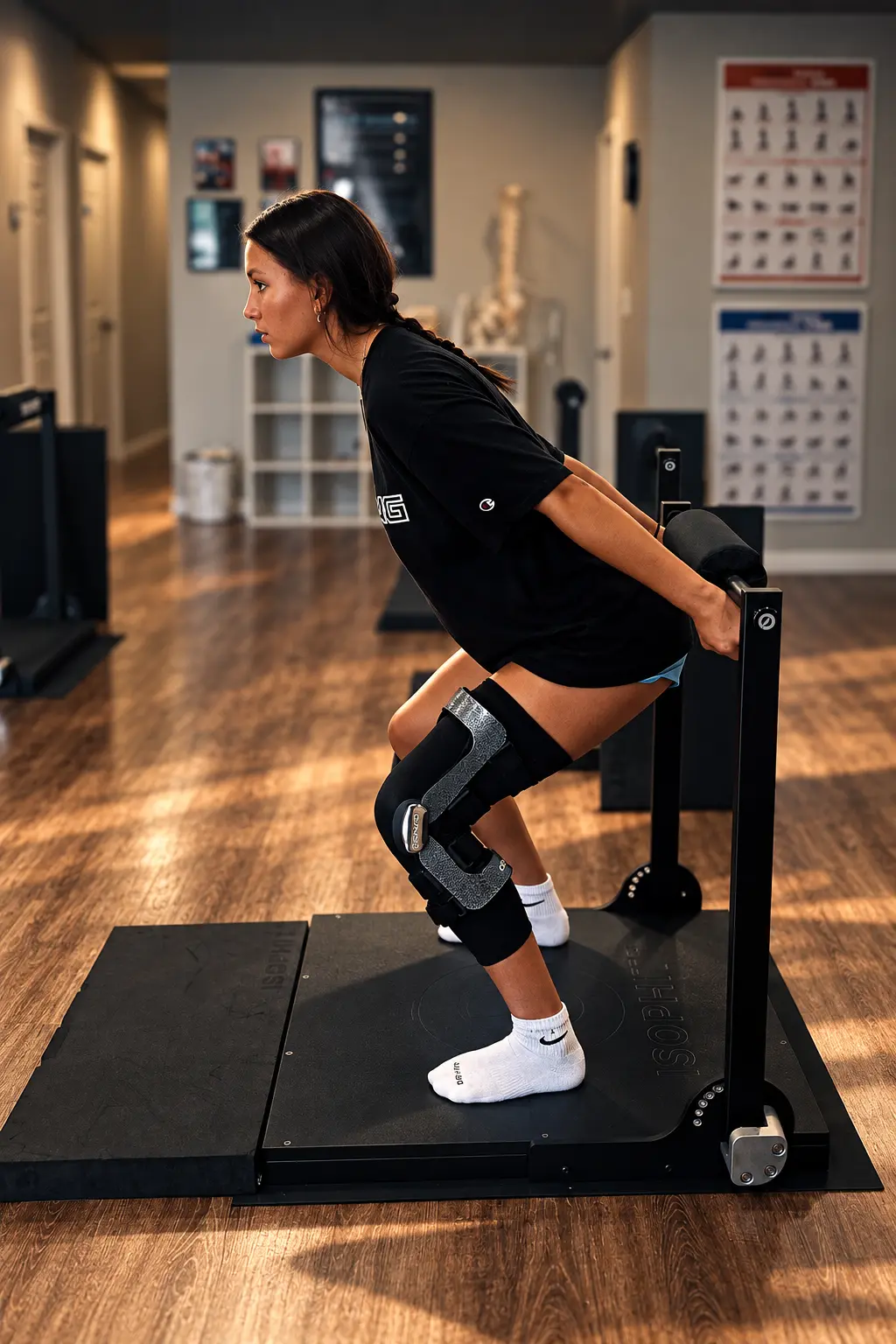
The process
The sequence stays consistent even as the exact training plan changes for the individual athlete.
Establish goals, health history, present capacity, and the context of the athlete's sport and season.
Complete one-on-one onboarding with appropriate 3D scanning, movement review, and baseline measurements.
Train through a progressive blend of isometric strength, mobility, speed mechanics, agility, and power development.
Repeat useful measures of force, body composition, movement, and respiratory performance over time.
Adjust training to support development while accounting for practices, competition, recovery, and academics.