
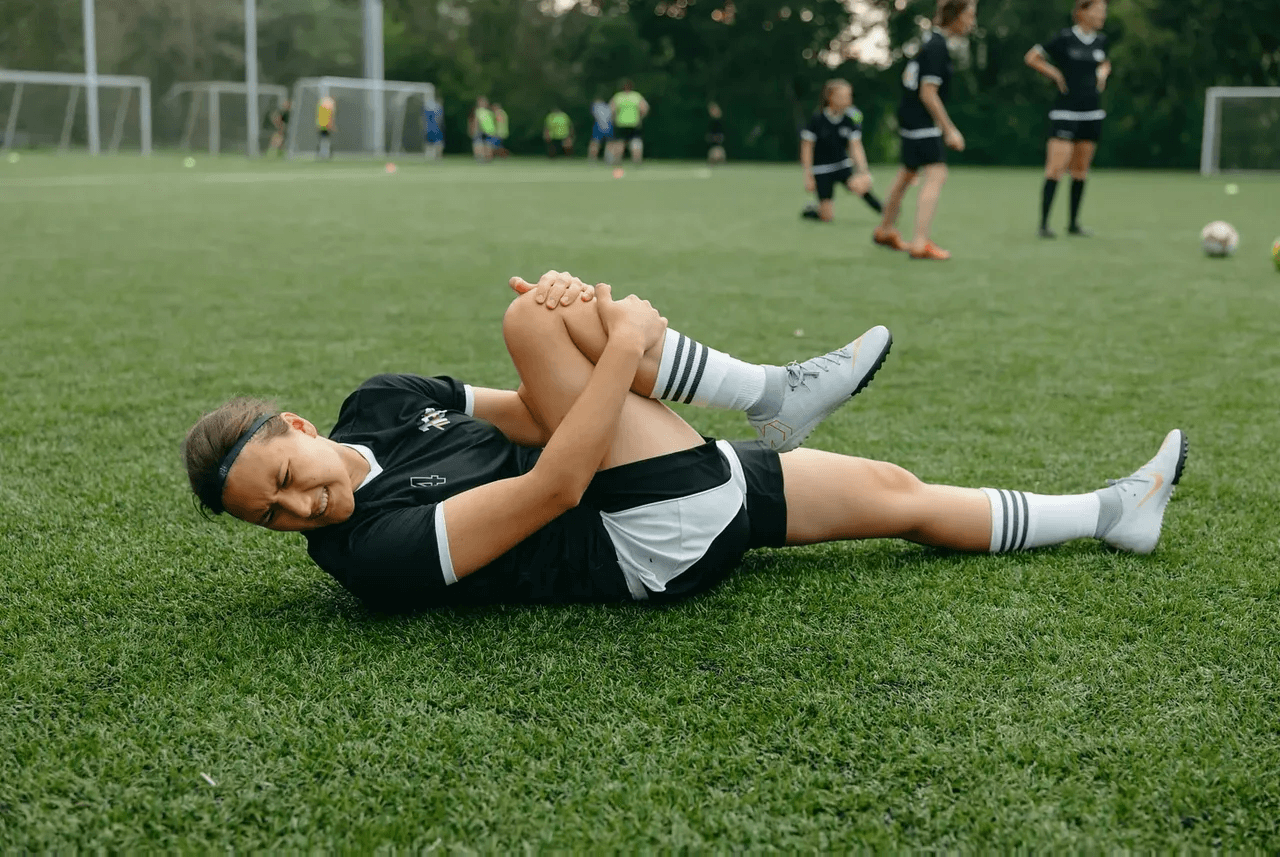
Over the past decade, youth sports, once primarily seen as a bastion of health and character building, have witnessed a concerning increase in injury rates among participants, from elementary school to high school athletes. This trend, supported by studies and medical observations, highlights a growing challenge within competitive youth athletics.
More than 3.5 million children under 14 are treated annually for sports-related injuries (American Academy of Orthopaedic Surgeons). Serious shoulder and elbow injuries in youth baseball and softball players have quintupled over the last 25 years, while ACL tears among high school athletes have surged by 26% in the last 15 years (American Academy of Pediatrics). Overuse injuries now account for nearly half of all sports injuries among middle and high school students (Centers for Disease Control and Prevention).
Common injuries are categorized as acute and overuse. Acute injuries from sudden trauma include sprains, strains, fractures, and concussions. Ankle sprains remain prevalent, while concussions are a growing concern in contact sports, with girls’ soccer and boys’ football reporting some of the highest rates (National Collegiate Athletic Association). Overuse injuries develop gradually from repetitive stress and include stress fractures, tendinitis, and growth-plate injuries (Mayo Clinic).
Early sport specialization is a primary driver. Many young athletes focus on one sport year-round at an intense level from a very young age. Repetitive training without adequate recovery places undue stress on developing musculoskeletal systems and contributes directly to overuse injuries (Ginsburg and Quigley).
The intensification and professionalization of youth sports also plays a significant role. Higher perceived stakes create rigorous schedules and pressure to play through pain, worsening minor injuries (Pyle et al.). Participation on multiple teams can deny the body crucial time to heal and adapt.
Children are uniquely vulnerable during growth spurts. Bones may grow faster than muscles and tendons, increasing susceptibility to repetitive-strain injury (American Academy of Orthopaedic Surgeons). Improper technique, insufficient preseason conditioning, and psychological or parental pressure can also create an environment ripe for injury (Centers for Disease Control and Prevention).
Addressing the rising tide requires a multifaceted approach: promote multi-sport participation, ensure adequate rest and recovery, and educate coaches, parents, and athletes about early specialization and excessive training. Long-term health and well-being must take priority over immediate competitive success.
References
- American Academy of Orthopaedic Surgeons. ‘Preventing Youth Sports Injuries.’ OrthoInfo, Oct. 2020. https://orthoinfo.aaos.org/en/staying-healthy/preventing-youth-sports-injuries/
- American Academy of Pediatrics. ‘Sports Specialization and Risk of Injury.’ Pediatrics, vol. 136, no. 6, 2015, pp. 1191–1193.
- Centers for Disease Control and Prevention. ‘Sports Injury Statistics.’ Injury Prevention & Control: Sports and Recreation Safety. Accessed 26 Oct. 2023.
- Ginsburg, Ross D., and Thomas Quigley. ‘Current Trends in Youth Sports Injuries.’ Journal of the American Academy of Orthopaedic Surgeons, vol. 27, no. 14, 2019, pp. e664–e671.
- Mayo Clinic. ‘Overuse Injuries: How to Prevent Them.’ Mayo Clinic, 11 Feb. 2023. https://www.mayoclinic.org/healthy-lifestyle/fitness/in-depth/overuse-injuries/art-20046554
- National Collegiate Athletic Association. ‘NCAA Injury Surveillance Program.’ NCAA.org. Accessed 26 Oct. 2023.
- Pyle, William D., et al. ‘The Impact of Parental Pressure on Youth Athletes.’ Journal of Sports Science & Medicine, vol. 18, no. 2, 2019, pp. 297–304.